 Summerville Paver Sealing
Paver sealing guide
Why Paver Sealing Matters in Summerville’s Humid Climate
See how Summerville humidity, shade, irrigation, storms, and pool moisture change paver cleaning, prep quality, and sealing expectations.
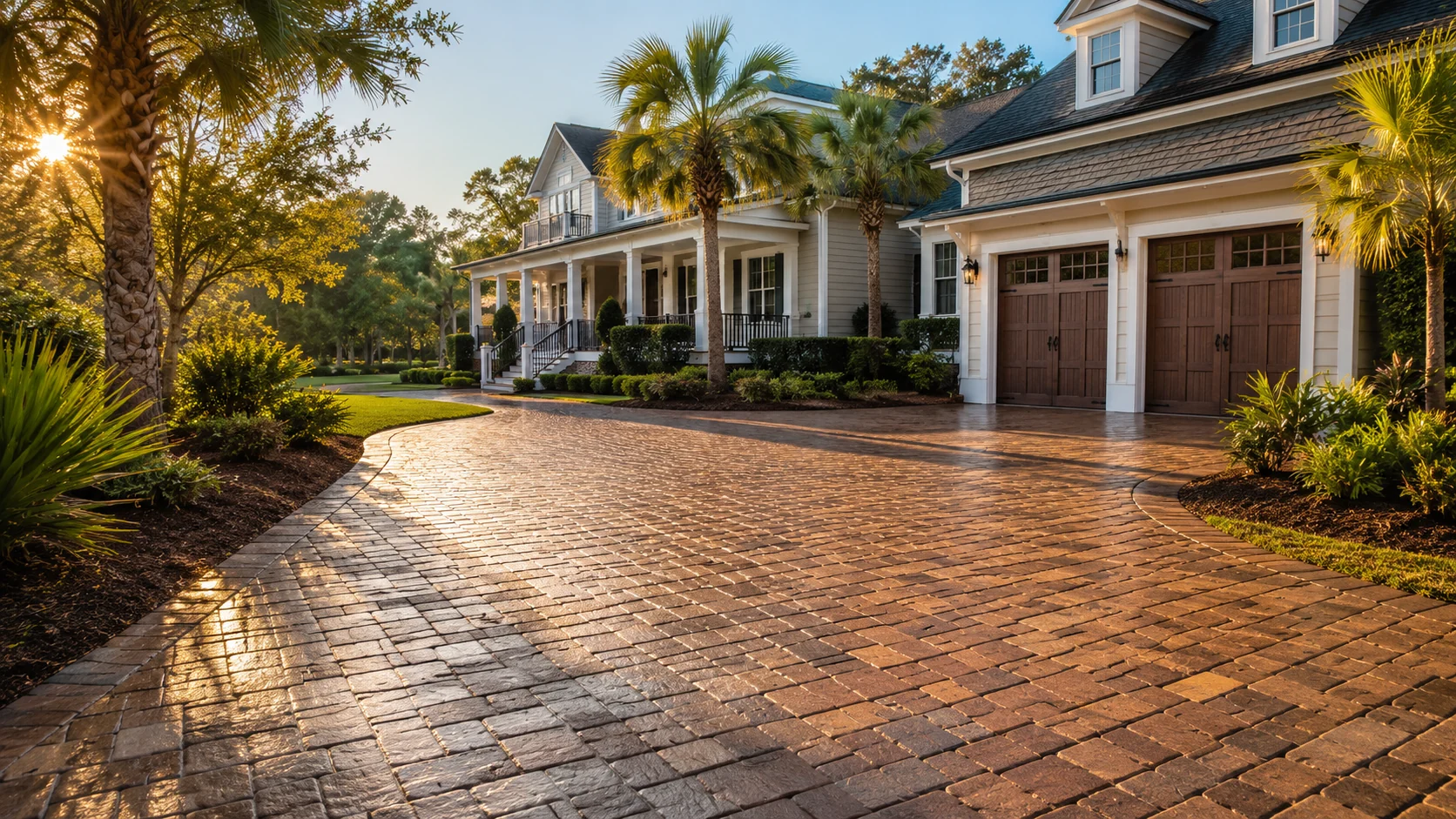
Summerville’s humid climate makes paver maintenance feel constant because outdoor hardscapes rarely get a long dry season. Shade, rain, irrigation overspray, pine debris, pollen, and warm temperatures support organic growth, staining, and joint movement. Sealing is not a magic shield, but when the surface is prepared correctly it can support easier cleaning, richer color retention, and a more intentional finished look.
Humidity changes the maintenance plan
In drier climates, homeowners can sometimes stretch sealing cycles and still keep a surface looking stable. In the Lowcountry, moisture keeps working on the surface even when no one is using the patio. Damp joints invite weeds. Shaded corners grow film. Irrigation edges stay wet after the rest of the driveway has dried. Pool decks rarely get a full reset because splash water is part of normal use.
That means the decision is less about “do I seal forever” and more about “what does humidity do to this exact surface, and what prep is required before a finish can hold?”
Where moisture shows up first
- North-facing patio edges and fence lines
- Under lounge furniture and shade structures
- Along irrigation heads and mulch beds
- Pool coping, drains, and splash zones
- Low spots where stormwater lingers after afternoon storms
These micro-zones matter because a surface can look acceptable from the street and still be failing in the places that stay damp longest. A good estimate reviews those edges instead of only the open center field of pavers.
Preparation matters more in humid markets
A rushed seal over damp or dirty pavers can create haze, poor bonding, or an uneven finish. Cleaning method, product fit, and drying conditions all matter. In Summerville, Nexton, Goose Creek, and nearby communities, the weather window can change quickly. That is why honest providers talk about prep and curing conditions instead of only the sheen level in a product brochure.
Homeowners should also be cautious about sealing as a cover-up. If joints are empty, mildew is active, old sealer is failing, or drainage is holding water, sealing first can lock problems in place. Cleaning, joint sand replacement, or restoration planning may be the better first move.
What sealing can and cannot do in the Lowcountry
Sealing can help with: color depth, a cleaner finished appearance, easier routine cleaning on many surfaces, and better presentation for driveways and outdoor living areas when prep is done correctly.
Sealing cannot honestly guarantee: permanent weed-free joints, zero future mildew in deep shade, perfect stain erasure, or a finish that ignores standing water and failed old coatings.
Those limitations are especially important for lead-generation and local search content. Homeowners comparing options around Summerville deserve practical expectations, not inflated promises.
Local surfaces to watch more closely
Pool decks, shaded patios, and driveways near irrigation zones often need extra review before selecting a finish. HOA-facing front approaches in master-planned communities may prioritize even color and clean joints. Older lots with heavy tree cover may need more organic-growth cleaning before any sealer discussion.
If your surface stays damp, compare paver cleaning, pool deck paver sealing, and efflorescence removal before requesting a full seal. Then use the contact page with photos of the wettest and most faded areas.
Humidity, irrigation, and the edge problem
Many sealing failures start at the edges. Irrigation overspray keeps bed lines wet. Mulch and pine straw sit against pavers. Fence lines and AC pads create shade corridors. After storms, runoff exits across the lowest joints first. If an estimate only looks at the center of the driveway, it misses the zones that usually fail earliest in Summerville weather.
That is why local content should talk about edges, shade, and moisture instead of only brand names and sheen levels. Homeowners can use that checklist before they ever request a quote: walk the perimeter, note damp corners, check joint height, and photograph cloudy patches in angled light.
Ready for local help? Review paver sealing, yourservice area, or the contact form.