 Summerville Paver Sealing
Paver sealing guide
How Often Should You Seal Pavers in Summerville, SC?
Learn when Summerville homeowners should reseal pavers using humidity, sun, drainage, pool use, joint sand loss, and surface performance signs.
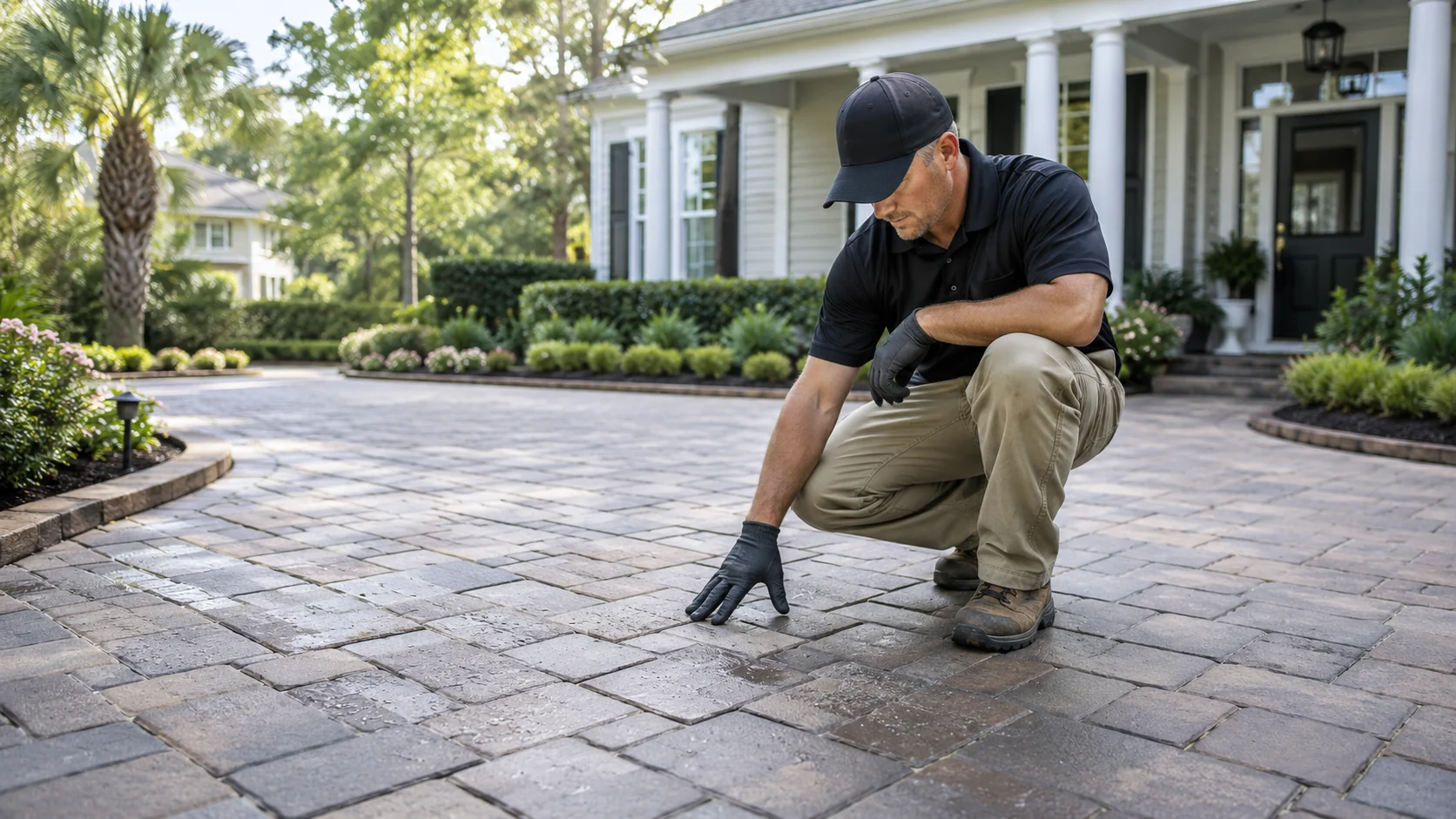
If you are researching how often to seal pavers in Summerville, SC, you are probably noticing the same pattern many Lowcountry homeowners see: the surface still works, but it no longer looks finished. Heat, afternoon storms, shaded live oaks, irrigation spray, pollen, pine debris, and daily use all change how long a sealed surface stays attractive. There is no honest one-size-fits-all calendar. A better approach is condition-based timing supported by local weather and surface type.
Why fixed schedules fall short in Summerville
A shaded backyard patio with light foot traffic does not wear the same way as a sunny driveway that sees daily vehicles. A pool deck with splash zones behaves differently from a front walkway protected by a porch overhang. Many Summerville, Nexton, and Cane Bay homes have multiple hardscape zones on one property, so one reseal date rarely fits every surface equally well.
As a practical rule, many homeowners review their pavers every couple of years and schedule service when water no longer beads, color has dulled, joints are washing out, mildew returns quickly, or a previous finish looks cloudy or patchy. Those signs are more useful than counting years alone.
Performance signs that matter more than the calendar
- Water soaks in quickly instead of beading on the surface.
- Pavers look chalky, pale, or uneven in color after a normal rinse.
- Tire paths, leaf stains, or furniture marks linger longer than before.
- Weeds appear in multiple joints after storms.
- Joint sand is visibly low along slopes, edges, or drain lines.
- Old sealer looks cloudy, blotchy, or peeled in spots.
A professional inspection can separate a simple maintenance clean from full re-sanding, sealer evaluation, restoration planning, or a new sealing application. That distinction keeps homeowners from paying for the wrong first step.
How Lowcountry weather shortens or stretches the cycle
Summerville sits in a humid climate with hot summers, frequent thunderstorms, and lots of organic debris. Open sunny driveways often fade faster. Shaded patios and north-facing edges grow mildew faster. Irrigation overspray keeps bed edges damp. Pool decks combine splash water, furniture, bare feet, and shade structures. Those conditions are why two homes on the same street can need service on different timelines.
HOA-visible driveways in Nexton and Cane Bay may get attention sooner because curb appeal standards are higher, even if the surface is only a few years old. Older Summerville neighborhoods may go longer between services and then need more prep when the surface finally looks tired.
Surface-by-surface timing guidance
Driveways: Review when color fades from the street view, tire wear patterns show, oil spotting increases, or sand migrates near the apron and garage threshold.
Patios: Review when furniture zones look uneven, shaded corners stay green, or the patio no longer matches the rest of the outdoor living package.
Pool decks: Review when splash zones dull quickly, joints wash out, or mildew returns after ordinary cleaning. Finish choice matters more here because barefoot use and moisture are constant.
Walkways: Review when edges look worn, joints open near beds, or the approach no longer frames the front entry cleanly.
What preparation changes about timing
The biggest difference between a clean professional result and a disappointing seal job is preparation. Dirty joints, organic growth, trapped moisture, and failing old coatings can all make a new finish look uneven or fail sooner. If a surface was sealed poorly in the past, the next service interval is not just about adding another coat. It may require more cleaning, haze evaluation, or staged restoration before sealing makes sense again.
That is why estimate requests should include photos of joints, cloudy patches, drainage edges, and overall color rather than only square footage. In humid weather, drying windows matter. Rushing a seal before the surface is ready is a common reason Lowcountry finishes blush or cloud.
Maintenance between sealing visits
Sealer reduces maintenance, but it does not eliminate it. Keep leaves, pine straw, and organic debris from sitting for long periods. Rinse pollen and dirt before it becomes embedded. Avoid harsh chemicals unless the product and provider guidance allow them. Watch shaded fence lines, tree canopies, and north-facing sections because they stay damp longer. Document sand loss, weeds, tire marks, or cloudy spots early instead of waiting until the next full cycle.
When to request an estimate
Request an estimate when pavers look faded after washing, water no longer beads, sand is missing, weeds keep returning, a previous coating looks cloudy, or you are preparing the home for guests, listing photos, or outdoor season. A condition-based review is more useful than guessing from a generic national schedule.
If you already know the surface type, compare paver sealing, paver cleaning, joint sand replacement, and your local Summerville service area page before sending photos through the contact form.
Ready for local help? Review paver sealing, yourservice area, or the contact form.